
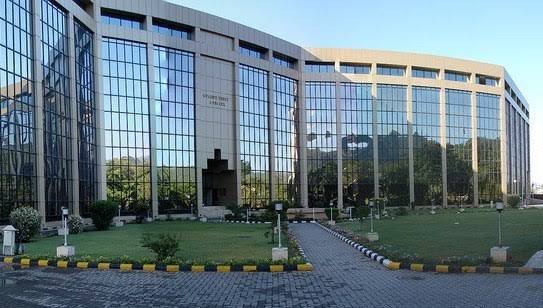
Pakistan’s tech dream just got a real address. On Saturday, 10 October 2026, Prime Minister Shehbaz Sharif inaugurated the National Technology Park in Islamabad and gave it a new name: Danish IT Park. Years in the making, the 12-storey facility is now open, and the government says it will train young Pakistanis in artificial intelligence, software and emerging technologies on a scale the country has never tried before.
If you are a student, a fresh graduate, a startup founder or simply someone in Islamabad and Rawalpindi wondering what this means for you, here is everything you need to know about Danish IT Park, explained simply.
What Is Danish IT Park?
Danish IT Park is Pakistan’s first national technology park, built in Islamabad by the Ministry of Information Technology and Telecommunication through the Pakistan Software Export Board. Until this week it was known as the Islamabad IT Park or National Technology Park. The Prime Minister renamed it to link it with his government’s Danish Schools programme, which focuses on quality education for underprivileged children.
At the opening ceremony, the PM called the park “a milestone in Pakistan’s digital transformation” and said its purpose was “not about brick and mortar” but about people and skills, as The Express Tribune reported.
The idea is simple: put startups, software houses, incubators, trainers, students and industry under one roof so that talent, ideas and investment can meet each other every day.
Where Is Danish IT Park Located?
The park stands at Chak Shahzad in Islamabad, where its groundbreaking took place in May 2021, according to ProPakistani. Its location makes it easy to reach from most parts of Islamabad and Rawalpindi, which already have one of the largest student populations in the country.
What Is Inside the Park: Key Facilities
Official Planning Commission figures give a clear picture of what the building holds. The park covers about 66,893 square metres across two basements, a ground floor and nine upper floors, according to the Planning Commission of Pakistan.
Inside you will find:
- 120 office spaces for IT and IT-enabled services companies
- An incubation centre with 15 offices for startups
- A Tier III data centre with uninterrupted power supply
- A business support centre offering legal, marketing and financial services
- An industry-academia linkage centre to connect universities with companies
- Research and development IT labs, virtual classrooms and an auditorium
For a young founder, this means a professional office, reliable power and internet, and access to mentors and legal help, all in one building. For universities, it means a direct bridge to employers.
How Many Jobs Will Danish IT Park Create?
This is the question most people are searching for. Earlier official estimates put the figure at around 10,000 jobs once the park is fully operational, as reported by ProPakistani. The PM went further at the opening, saying the park would train not thousands but hundreds of thousands of young people over time.
Jobs will come in two ways. First, companies renting space in the park will hire developers, designers, data analysts and support staff. Second, the training programmes planned for AI and IT skills are meant to prepare young people for freelance and remote work, where Pakistan already ranks among the world’s leading freelance markets.
Who Will Run Danish IT Park?
In a notable decision, the government will not run the park itself. The PM directed the Ministry of IT to invite local and international IT and AI companies through transparent bidding and select the best one to manage the facility “without government interference,” according to The News.
This matters. Professional private management usually means better maintenance, faster decisions and programmes designed around what the industry actually needs. The PM said experts and teachers would run the park, with training based on globally recognised best practices.
The South Korea Connection
Danish IT Park is a product of Pakistan and South Korea’s long friendship. The project cost about $88.4 million, with roughly $76.3 million coming as a loan from the Korea Exim Bank’s Economic Development Cooperation Fund and the rest from Pakistan’s development budget, according to the Planning Commission.
At the ceremony, Korean Ambassador Han Sungho said the two countries have worked together for 43 years and that South Korea has contributed more than $340 million in development assistance to Pakistan.
Why This Matters: Pakistan’s Growing Tech Economy
The opening comes at a strong moment for Pakistan’s tech sector. Dr Sohail Munir, Chairman of the Pakistan Digital Authority, said at the event that Pakistan’s IT exports crossed $4.5 billion in the last fiscal year.
The same week brought more good news. Pakistani companies won 11 awards at the ASOCIO Digital and AI Awards 2026 in Jakarta, competing against organisations from 26 economies across Asia and Oceania, as ProPakistani reported. Winners included KPITB for Digital Government, CARE for AI in Education, DxVision AI for AI in Healthcare and SecureBeans for AI in Cybersecurity.
Together, these stories show that Pakistani talent can compete globally. What has often been missing is infrastructure, and that is the gap Danish IT Park is meant to fill.
More IT Parks Coming Across Pakistan
Islamabad is just the start. The PM announced that similar IT parks will be built in all four provinces, as well as Azad Jammu and Kashmir and Gilgit-Baltistan, once the Islamabad park is fully running, according to The Express Tribune. A Daanish University is also being set up in Islamabad.
If delivered, this could bring world-class tech spaces closer to students in Peshawar, Quetta, Muzaffarabad and Gilgit, not just the big cities.
What Students and Startups Should Do Now
The park has only just opened, and the management company is yet to be selected, so admissions and office applications have not been announced. Here is how to be ready:
- Follow the Ministry of IT and the Pakistan Software Export Board for official announcements on training and office space.
- Start building skills now in AI, Python, cloud computing, cybersecurity and digital marketing through free online courses.
- Prepare a simple business plan and pitch deck if you run a startup, since incubation seats will be limited to 15 offices.
- Join tech meetups and community events in the twin cities to build your network. You can find upcoming ones on our Islamabad and Rawalpindi Events page.
Frequently Asked Questions About Danish IT Park
What is Danish IT Park?
Danish IT Park is Pakistan’s first national technology park, located in Islamabad. It was inaugurated by Prime Minister Shehbaz Sharif on 10 October 2026 and was previously called the Islamabad IT Park or National Technology Park.
Where is Danish IT Park located?
Danish IT Park is located at Chak Shahzad, Islamabad.
How many jobs will Danish IT Park create?
Official estimates put the figure at around 10,000 jobs once the park is fully operational, alongside AI and IT training for young people.
Who will manage Danish IT Park?
A local or international IT company will be selected through transparent bidding by the Ministry of IT and Telecommunication to run the park without government interference.
What facilities does Danish IT Park have?
It has 120 offices for IT companies, a 15-office startup incubation centre, a Tier III data centre, R&D labs, virtual classrooms, an auditorium, a business support centre and an industry-academia linkage centre.
Who funded Danish IT Park?
The project cost about $88.4 million, mostly financed by a loan from the Korea Exim Bank’s Economic Development Cooperation Fund, with the rest from Pakistan’s PSDP.
Will there be more IT parks in Pakistan?
Yes. The Prime Minister announced similar IT parks for all four provinces, Azad Jammu and Kashmir and Gilgit-Baltistan.
Final Thoughts
Danish IT Park is more than a new building on the Islamabad skyline. It is a test of whether Pakistan can turn its young population and growing IT exports into a lasting digital economy. The facilities are world class, the management model is promising, and the plan to expand nationwide is ambitious. Now the real work begins: filling those offices, training those students and turning ideas into companies.
We will keep you updated as training programmes and applications open. For more news, events and stories from across Pakistan, keep visiting HelloSalam and explore our Community section.