
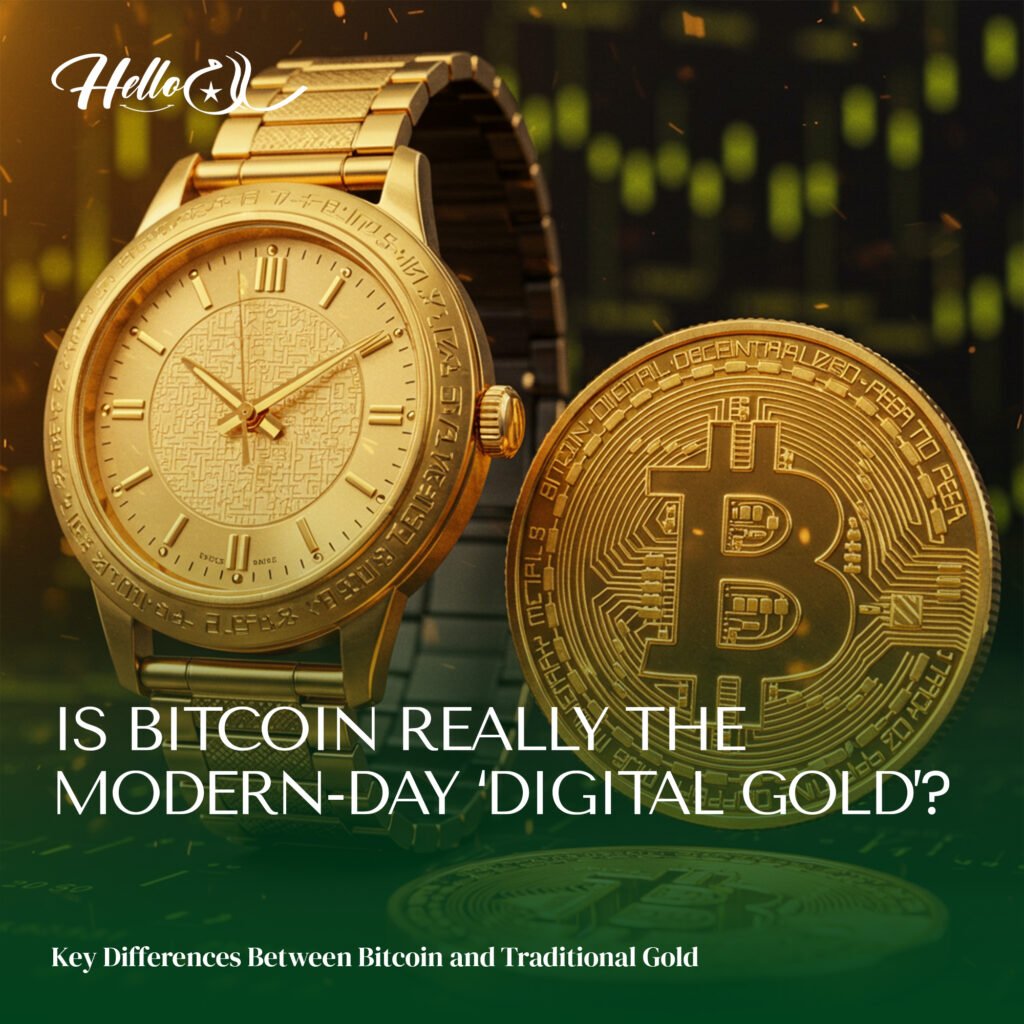
Is Bitcoin Truly “Digital Gold”? A Simple Guide to Its Enduring Popularity
Explore the fascinating comparison between Bitcoin and gold. Understand why this digital asset is often called “digital gold,” its unique features, and why it has captured the attention of investors worldwide, including in Pakistan.
Is Bitcoin Truly “Digital Gold”? A Simple Guide to Its Enduring Popularity
In the fast-paced world of digital finance, Bitcoin often sparks lively discussions. One of the most common phrases you’ll hear associated with it is “digital gold.” But what does that really mean? Is Bitcoin truly the modern equivalent of the precious metal that has captivated humanity for millennia? Let’s dive into this intriguing comparison and uncover why Bitcoin has become so popular, using a simple analogy to make sense of it all.
The Analogy: Your Grandparent’s Vintage Watch
Imagine your grandparents owned a very special, limited edition vintage watch. It wasn’t just any watch, it was made by a renowned craftsman, only a few were ever produced, and it required immense skill to create. This watch wasn’t tied to any single country’s economy, it was recognized and valued globally for its craftsmanship and rarity. People saw it as a way to store their wealth, a valuable item they could pass down through generations, especially during times when regular money felt less secure. Its value wasn’t dictated by a bank, but by what people collectively agreed it was worth, based on its scarcity and unique qualities.
Now, think of Bitcoin as that digital vintage watch. It’s a unique, digital asset that shares some striking similarities with traditional gold and our imaginary watch, making the “digital gold” label quite fitting for many.
The Golden Similarities: Why the Comparison Sticks
The reason Bitcoin is so often called “digital gold” boils down to a few key characteristics it shares with the physical commodity:
- Scarcity and Limited Supply: Just like there’s a finite amount of gold in the earth, there will only ever be 21 million Bitcoins created. This fixed, limited supply is coded into its very design, making it inherently scarce. This contrasts sharply with traditional currencies, which governments can print more of at will, potentially leading to inflation. This programmed scarcity is a core reason why Bitcoin is seen as a valuable asset, much like gold’s rarity contributes to its worth.
- Store of Value: For centuries, gold has been considered a reliable store of value, a safe haven during economic uncertainty and a hedge against inflation. People buy gold to preserve their wealth, especially when they worry about their local currency losing purchasing power. Similarly, many investors view Bitcoin as a modern store of value, a way to protect their assets from economic downturns and inflationary pressures. This appeal is particularly strong in regions experiencing economic instability, where traditional financial systems might be less stable.
- Decentralization and Independence: Gold isn’t controlled by any government or central bank. Its value is universal. Bitcoin operates on a similar principle, being a decentralized digital currency. It’s not issued or controlled by any single authority, government, or financial institution. This independence from traditional financial systems makes it attractive to those seeking an alternative to conventional banking and monetary policies.
Key Differences: Where the Analogy Diverges
While the “digital gold” metaphor is powerful, it’s also important to acknowledge where the comparison ends. Bitcoin and gold are not identical, and understanding their differences is crucial:
- Mining Process: Gold mining involves physically extracting ore from the ground, a process that is complex, risky, and environmentally impactful. Bitcoin mining, on the other hand, involves powerful computers solving complex mathematical problems to verify transactions and secure the network. This is a computational process, primarily influenced by the cost of electricity. While both require effort and resources, their methods are fundamentally different.
- Volatility: Historically, Bitcoin has been significantly more volatile than gold. Its price can experience rapid and dramatic swings in short periods. While gold also fluctuates, its movements are generally more stable, especially during market crises, where it often acts as a more traditional safe-haven asset.
- Physical vs. Digital: Gold is a tangible, physical asset that you can hold. Bitcoin is entirely digital, existing as data on a global computer network. This digital nature offers benefits like ease of transfer and divisibility, but it also means it doesn’t have the physical presence of gold.
- Market Correlation: Studies often show a low, near-zero correlation between Bitcoin and gold returns. This suggests that investors don’t always treat them as direct substitutes for each other. Gold’s role as a stable safe-haven asset during market turmoil is distinct from Bitcoin’s market behavior.
Why Is It So Popular? Beyond the “Digital Gold” Label
Despite the differences, the “digital gold” narrative has significantly contributed to Bitcoin’s popularity. Its appeal stems from several factors:
- Global Accessibility: Anyone with an internet connection can access Bitcoin, regardless of their location or banking status. This makes it a truly global asset.
- Ease of Transfer: Sending Bitcoin across the world is as simple as sending an email, often with lower fees and faster speeds than traditional banking methods.
- Divisibility: A single Bitcoin can be divided into 100 million smaller units, called Satoshis, making it accessible for investments of any size. You don’t need to buy a whole Bitcoin to own some.
- Growing Adoption: From individual investors to large corporations and even some countries, the adoption of Bitcoin is steadily increasing, further solidifying its perceived value and utility. Financial institutions like Deutsche Bank have even explored its potential to become “21st century gold.”
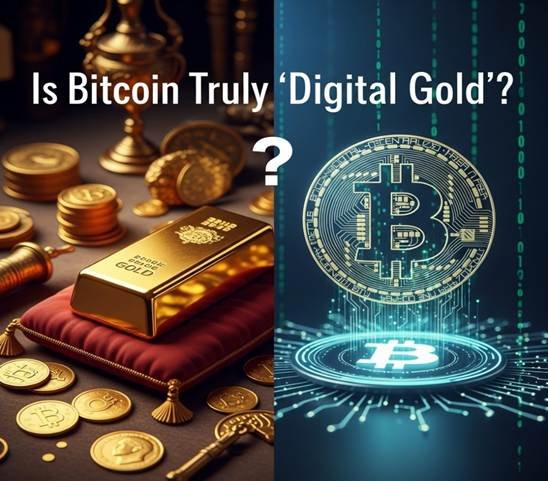
A New Kind of Value in the Digital Age
While Bitcoin may not be “officially” digital gold, the phrase is a widely used metaphor that effectively highlights its similarities to gold, such as its limited supply and role as a store of value, especially as an inflation hedge. It’s a new type of digital asset with its own unique characteristics and potential.
For many, especially in countries like Pakistan where economic stability can be a concern, Bitcoin’s promise as an inflation hedge and a borderless way to transfer value makes it an incredibly attractive option. It represents a fascinating evolution in how we perceive and manage wealth in an increasingly digital world. Whether you see it as a direct replacement for gold or a complementary asset, Bitcoin’s enduring popularity is a testament to its innovative design and its potential to reshape the future of finance.
Stay tuned with Hello Salam PK for more!


Pingback: Will Pakistan Launch Its Own Digital Currency? - Hello Salam Pakistan