
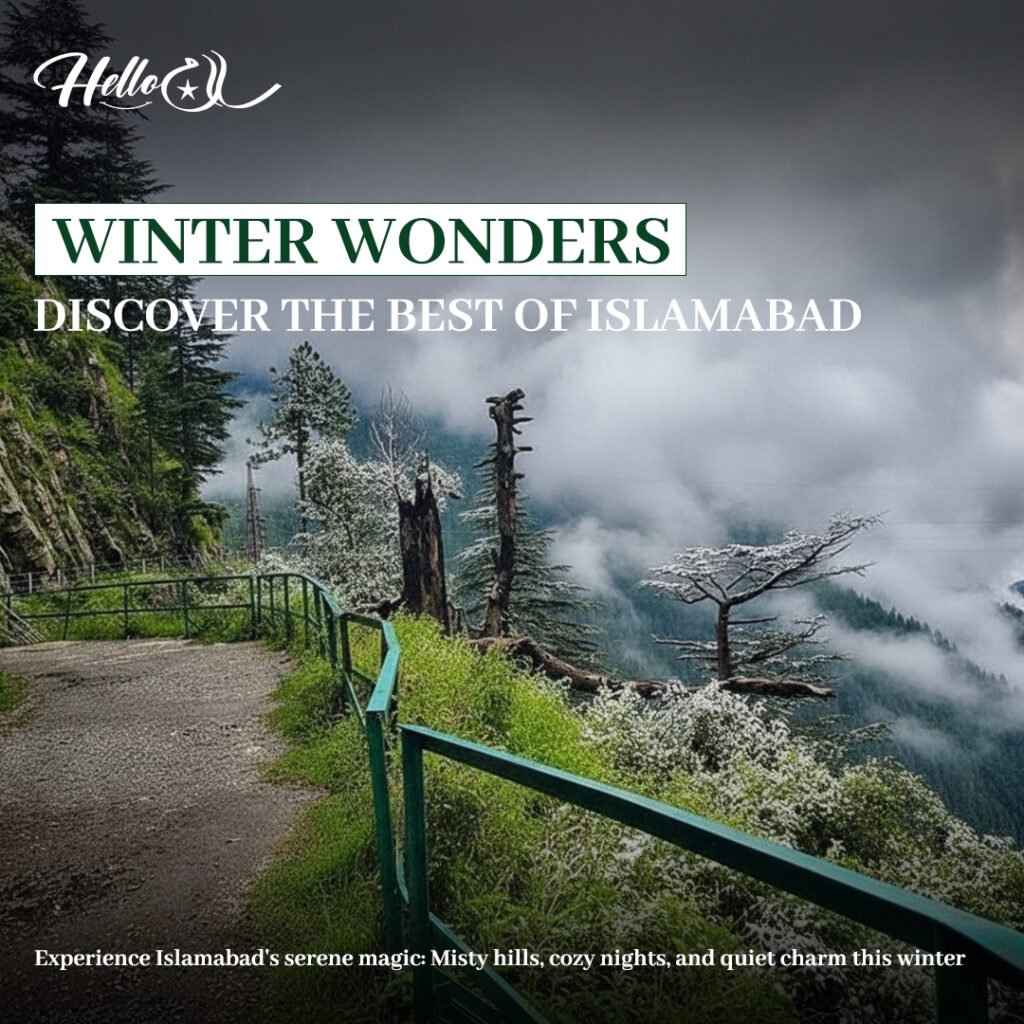
There is a specific kind of magic that hits Islamabad once the calendar turns to January. It is not just the drop in temperature; it is the way the city slows down. The Margalla Hills, usually a vibrant green, take on a deeper, mistier hue, and the broad avenues feel quieter, almost as if the city is holding its breath. If you are planning to visit between now and March 2026, you are catching the capital in its most intimate state of chilly days and cozy nights.
A Sun-Drenched Daytime Escape
During the day, Islamabad is actually quite kind. The sun is usually out, and it has this soft, golden quality that makes everything look like a postcard. It is warm enough to walk through F9 Park or visit the Faisal Mosque with just a light sweater, but there is always a snap in the air that reminds you it is winter. This is the best time for the hills. Whether you are a serious hiker hitting Trail 3 or just looking for a view at Daman e Koh, the climb is much more enjoyable without the summer humidity. By midday, you will likely find yourself peeling off layers, but do not be fooled; the moment the sun starts to dip behind the peaks, the temperature doesn’t just fall, it plunges.
Bonfires and Kahwa
As evening approaches, the city vibe shifts completely. This is when the cozy nights really come alive. You will smell it before you feel it—the scent of woodsmoke from heaters and the sweet, nutty aroma of Kashmiri Chai being brewed at roadside stalls. The cold here is a dry cold, the kind that makes you want to huddle around a bonfire. Places like the F6 and F7 Markaz become hubs for night owls. People do not stay inside; they just wrap themselves in thick pashminas and sit outdoors at cafes with gas heaters humming nearby. If you want the ultimate winter experience, head up to Pir Sohawa for dinner. Eating hot, spicy BBQ while looking down at the city lights through a silver winter haze is a rite of passage.
Winter 2026 Travel Forecast
If you are traveling during the first quarter of 2026, the current outlook suggests a season of extremes. January 2026 is expected to be particularly cold and dry due to La Niña’s influence, with nighttime temperatures often dropping to 2 Degree Celsius or even lower during cold waves. While the days will remain sunny and pleasant around 16 Degree Celsius, the frost at night will be sharp. Moving into February, expect the usual transition where western disturbances might bring much needed rain, temporarily clear the winter smog but make the air feel much damper. By March, the city begins its famous spring awakening, with daytime highs climbing toward 21 Degree Celsius though the night’s stay refreshingly cool.
Quick Tips for Your Stay
Mastering the art of layering is the secret to a good trip. You will want a mix of light cotton for the midday sun and heavy wool or down jackets for dusk. It is also smart to keep an eye on the air quality index before planning a long outdoor hike, as winter haze can sometimes settle in the valley. Most importantly, do not skip the street food. In winter, Islamabad’s corn soup carts are everywhere. It is simple, hot, and arguably the best way to warm your hands while walking through a Markaz.
Islamabad is not a city of high-speed tourist attractions; it is a city of moods. And there is no mood more beautiful than a misty winter evening with a hot cup of tea in your hand.
For more blogs like this, visit Hello Salam
Related Reads on HelloSalam
- Winter Discounts
- Pakistani Desi Winter Snacks
- Top Influencers of Islamabad 2025
- Pakistan Through Asian Games Seminar: Cricket Semi-Finals Update
- iPhone 18 Pro & 18 Pro Max: Full Specs, Design, Camera, Price & iOS 27 Features
Explore more Latest updates on HelloSalam.