Pakistani Blue Pottery: Multani Kashigari and the Legacy of Multan’s Art!
Discover the history of Multani Blue Pottery. Explore Kashigari art, Pakistani handicrafts, and the City of Saints, Pakistan’s cultural pride for the world.
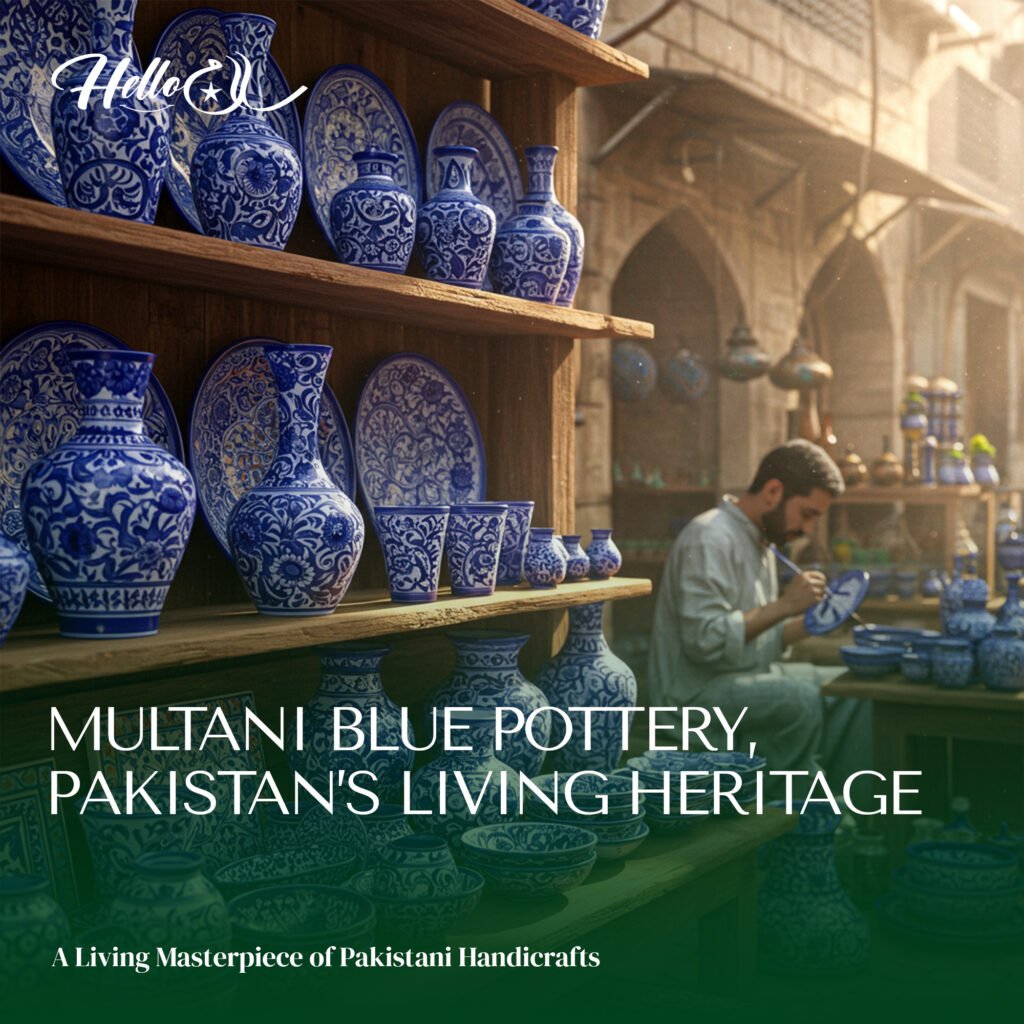
A Living Masterpiece of Pakistani Handicrafts:
In the heart of South Punjab lies Multan, the City of Saints, where art, spirituality, and history converge. Among its treasures, none shine brighter than Blue Multani Art, locally known as Multani Kashigari. With its deep cobalt hues, intricate floral motifs, and sacred geometric patterns, this centuries-old craft is more than pottery, it is Pakistan’s pride, a living heritage that continues to enchant travelers, collectors, and lovers of Pakistani handicrafts worldwide.
The Origins of Multani Blue Pottery on the Silk Road:
The story of Multani Blue Pottery begins with the cultural exchanges of the Silk Road. Influenced by Persia, Kashgar in China, and Central Asia, cobalt-blue glazing techniques found their way to Multan nearly 1,300 years ago. Archaeological evidence suggests that by the 9th century, Multani artisans were already crafting glazed tiles for mosques and shrines. These works blended Islamic art with local traditions, creating a style unique to Pakistani culture art and admired by visitors globally.
For travelers, every vase, plate, or tile from Multan is not just an object, it is a piece of history, carrying echoes of Persian palaces, Mongol caravans, and Mughal domes.
The Artistry Behind Multani Kashigari:
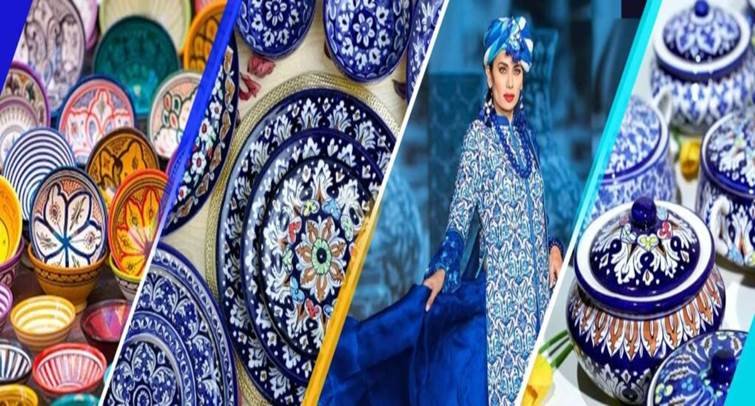
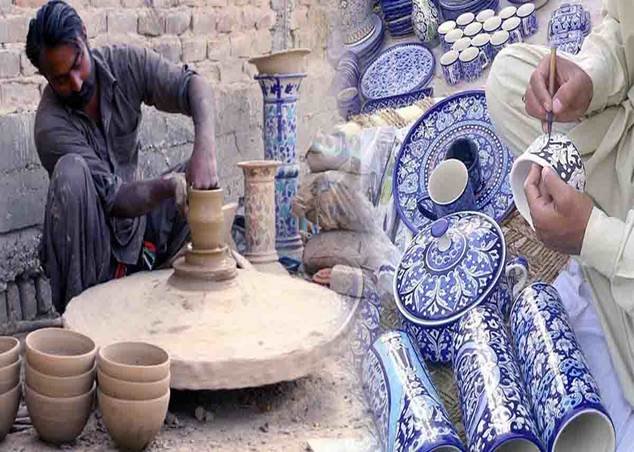
Creating Blue Pottery Multan is no ordinary task; it is an act of devotion. The process begins with locally sourced clay, mixed with quartz and gum for strength. Once shaped, the piece is left to dry before artisans’ hand-paint intricate traditional blue pottery designs of Multan using cobalt oxide, the source of its iconic azure hue. After glazing, the pottery is fired at high temperatures, locking in the brilliance of its patterns.
From floral vines and pomegranate motifs to Quranic calligraphy, each design reflects the soul of Multani culture and heritage. For artisans, the color blue symbolizes the heavens and the divine, making every stroke a prayer, every vessel a testament to Pakistani art and craft.
Why Pakistani Blue Pottery Matters Globally:
Handcrafted Heritage of Multani Artisans:
No two pieces are identical, each shaped by Multani artisans and pottery workshops. This makes every creation an authentic Pakistani cultural souvenir for foreigners.
Sustainable Handicrafts of Pakistan:
Made from natural clay, minerals, and dyes, this craft represents sustainable handicrafts of Pakistan, appealing to eco-conscious travelers.
Blue Pottery Multan History in Architecture:
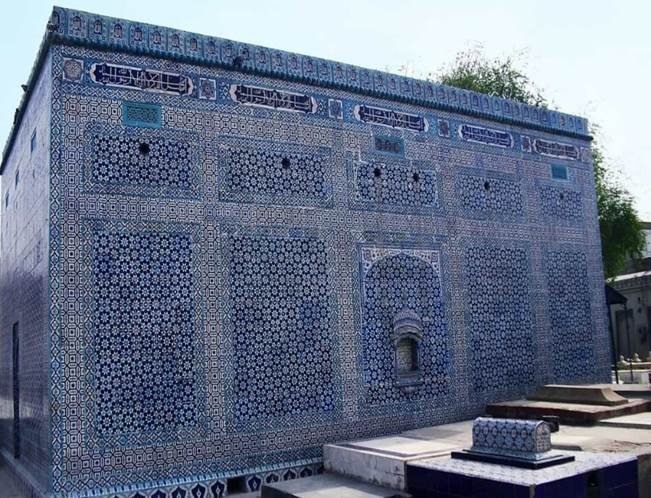
From the shrine of Shah Rukn-e-Alam to Mughal tombs, the same designs still adorn monuments, showing why Multani Kashigari is considered a living link to Pakistan’s glorious past.
Multan City of Saints: Beyond Pottery:
While Multani art and craft is its crown jewel, Multan offers much more to visitors. The city is home to majestic Sufi shrines, centuries-old bazaars, and legendary sweets like Sohan Halwa. Yet, the pottery workshops near Daulat Gate remain the most captivating stops for cultural travelers.
This is where you can truly experience Pakistani handicrafts for tourists, see artisans shaping clay with indigo-stained hands, and understand why Multan is called the City of Saints (Multan City of Saints meaning in Urdu reflects its spiritual legacy).
Revival and Global Recognition of Multani Art and Craft:
Despite challenges from mass production, dedicated institutions like the Institute of Blue Pottery Development are reviving the craft. Today, handmade Multani blue pottery in Pakistan is showcased in the British Museum, cultural missions abroad, and international art exhibitions.
For travelers, purchasing authentic pieces provides unique Pakistani gifts for tourists while sustaining one of the world’s oldest ceramic traditions.
How Tourists Can Experience Multani Culture:
Visit Multani Pottery Workshops:
See Multani artisans at work in the old quarters, shaping clay with techniques passed down for centuries.
Where to Buy Multani Pottery in Pakistan:
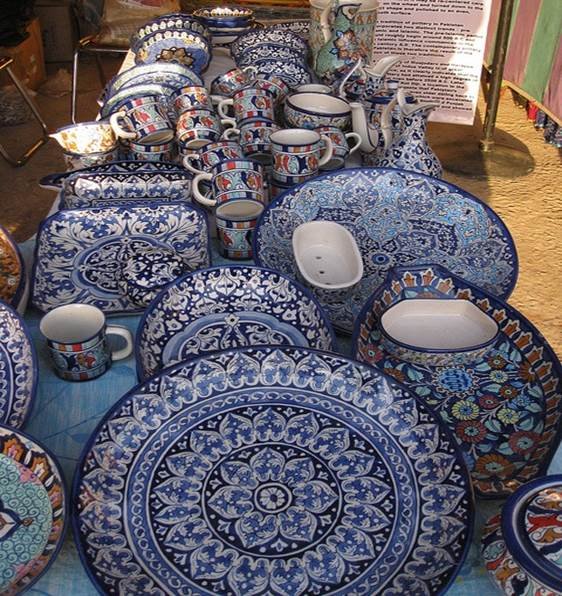
Local bazaars in Multan offer authentic Pakistani souvenirs including vases, jewelry boxes, and hand-painted plates. For those abroad, select online stores and exhibitions also feature Pakistani ceramic art.
Explore Shrines and Monuments:
Admire traditional Islamic art in Pakistan through the intricate tiles of shrines, blending faith with artistry.
Join Exhibitions:
International fairs frequently showcase Multani Kashigari, connecting the Pakistani culture art with global audiences.
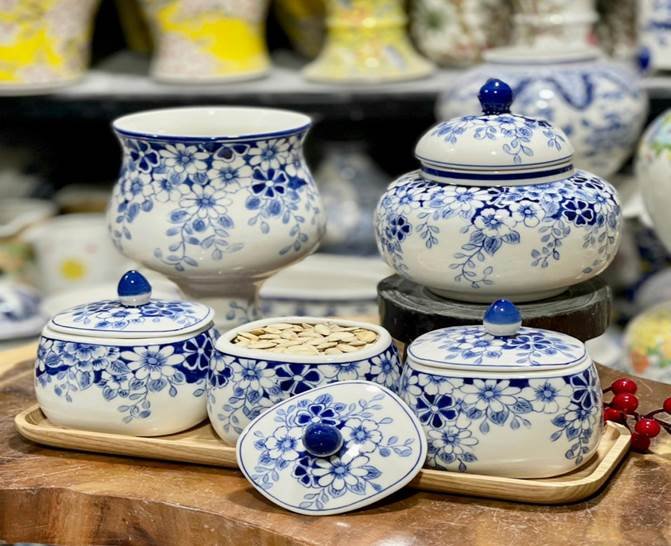
Blue Multani Art: A Cultural Souvenir for the World:
In a rapidly modernizing world, Multani Blue Pottery remains timeless. Its beauty lies not just in its patterns but in its spirit, a spirit of patience, devotion, and creativity.
For foreigners visiting Pakistan, taking home a piece means embracing the story of Pakistani Multani art culture and the living traditions of the City of Saints in Pakistan.
So, when you wander through Multan’s bustling bazaars or explore its shrines, let the blue Multani art guide you. It is more than pottery, it is Pakistan’s pride, proof that beauty created by hand and heart will always outshine the mass-produced.
Stay tuned with Hello Salam PK for more!