
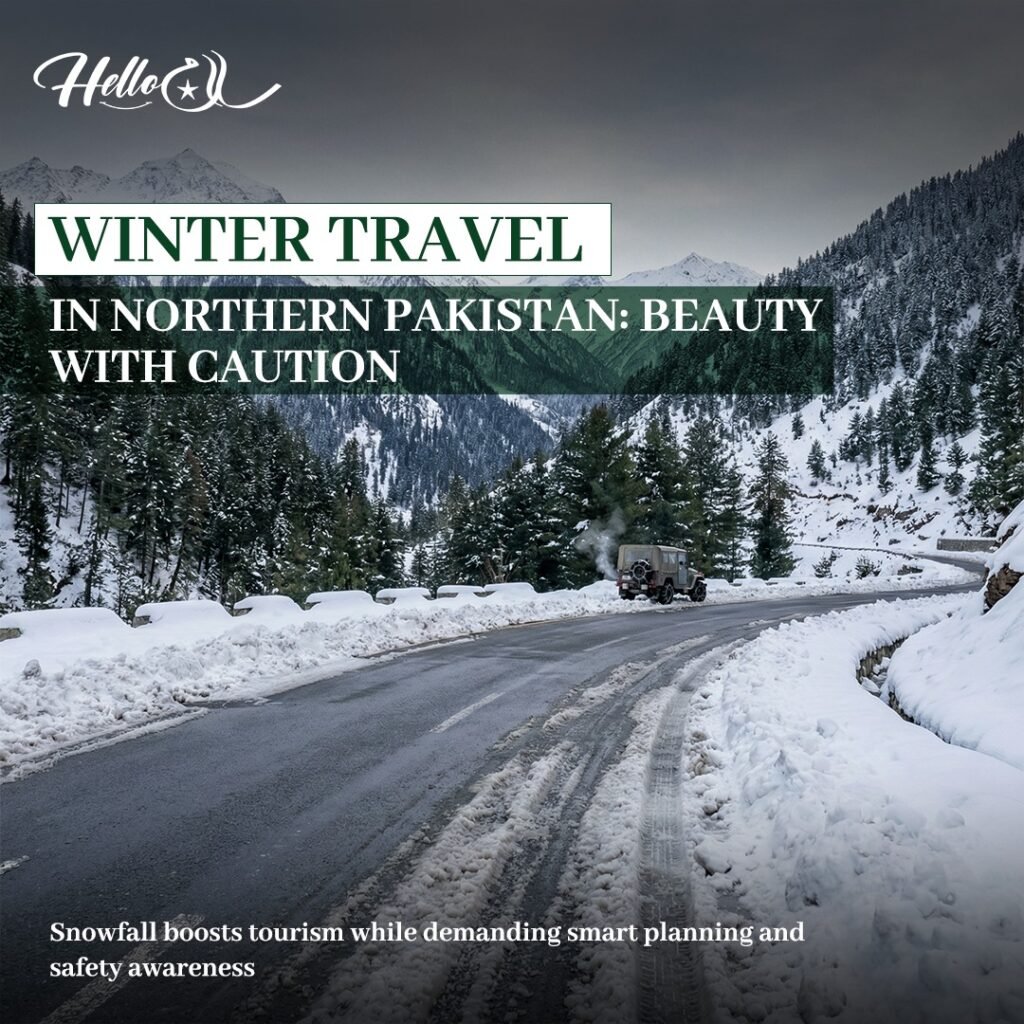
Northern Pakistan is once again at the center of attention as winter tightens its grip across the region. Snowfall has transformed the mountains, valleys, and hill stations into stunning white landscapes, drawing tourists from across the country. At the same time, changing weather conditions have made travel more challenging, prompting authorities to issue advisories and urging travellers to plan carefully.
The current travelling situation in Northern Pakistan is a mix of beauty and caution. While snow has boosted winter tourism and brought life to local businesses, it has also created road blockages, slippery routes, and unpredictable conditions that require awareness and preparation.
Winter Snowfall and Its Impact on Travel
Over the past weeks, widespread snowfall has been recorded in many northern regions, including Murree, Hunza, Skardu, Swat, and the Naran Kaghan region. These areas are known for their scenic beauty, but during winter they also become vulnerable to harsh weather.
Snowfall has led to a noticeable drop in temperatures, particularly at night. In higher altitude areas, temperatures frequently fall below freezing, causing ice to form on roads and walkways. This has made driving more difficult, especially for visitors unfamiliar with mountainous terrain or winter conditions.
In popular destinations like Murree, heavy snowfall has caused temporary traffic congestion as vehicles struggle to navigate narrow, icy roads. Authorities have had to regulate traffic flow to prevent overcrowding and ensure safety. Similar situations have been observed in Swat and Kaghan, where snowfall has slowed movement and affected access to tourist spots.
Rise in Winter Tourism
Despite these challenges, winter tourism in Northern Pakistan is experiencing a strong surge. Snow-covered landscapes attract families, photographers, and adventure seekers who want to experience the charm of winter in the mountains. Hotels and guesthouses in many regions have reported high occupancy, especially during weekends and holidays.
Tour operators have adjusted their offerings to suit winter travel. Many are providing guided tours with experienced drivers, snow-ready vehicles, and flexible itineraries. This has made it easier for tourists to explore the region while reducing some of the risks associated with winter travel.
In areas like Hunza and Skardu, snowfall has enhanced the natural beauty rather than disrupted daily life. Local communities, accustomed to harsh winters, continue their routines while welcoming tourists eager to enjoy snow-laden views, frozen rivers, and quiet mountain mornings.
Weather Conditions and Ongoing Uncertainty
The biggest factor influencing the travelling situation in Northern Pakistan is the unpredictable weather. Winter systems moving across the region bring a combination of rain, snowfall, fog, and strong winds. These conditions can change rapidly, sometimes within hours.
Light snowfall may suddenly intensify, leading to reduced visibility and road closures. Fog in lower regions can also delay travel, especially for those heading toward the mountains from major cities. In high-altitude zones, snow accumulation increases the risk of avalanches and landslides, particularly on steep routes and narrow passes.
Because of this uncertainty, travelers are advised to remain flexible with their plans. Fixed schedules can become stressful when roads close unexpectedly or weather conditions worsen overnight.
Travel Advisories and Safety Measures
Authorities have issued repeated advisories urging caution for anyone planning to travel north. These advisories focus on avoiding unnecessary travel during active snowfall, checking road conditions before departure, and following instructions issued by local administrations.
In hill stations like Murree, traffic is often restricted when snowfall becomes heavy. Entry points may be temporarily closed to prevent overcrowding and ensure that emergency services can operate smoothly. Similar measures are taken in other tourist-heavy regions during peak snowfall periods.
Motorists are strongly advised to ensure their vehicles are winter-ready. This includes using snow chains where necessary, keeping fuel tanks full, and carrying emergency supplies such as blankets, food, and warm clothing. Driving at night is discouraged, as temperatures drop sharply and visibility decreases.
Road Conditions Across the Region
Road conditions vary widely depending on location and altitude. Main highways leading to northern regions are generally cleared quickly, but secondary roads and village routes may remain snow-covered for longer periods.
In some areas, snow-clearing operations work continuously to reopen key routes. However, heavy snowfall can overwhelm these efforts, leading to temporary closures. Travelers heading toward remote valleys should be prepared for delays and should always confirm route accessibility in advance.
Ice formation remains a major concern even after snowfall stops. Roads that appear clear during the day can become dangerously slippery after sunset, increasing the risk of accidents.
Balancing Beauty and Responsibility
The allure of Northern Pakistan in winter is undeniable. Snow transforms familiar landscapes into something magical, offering peaceful views and a slower pace of life. However, travelling during this season requires a sense of responsibility.
Visitors are encouraged to respect local guidelines, avoid risky behavior, and prioritize safety over sightseeing. Ignoring advisories or pushing through unsafe conditions not only puts travelers at risk but also strains local emergency services.
Responsible tourism helps ensure that winter travel remains enjoyable for everyone. Supporting local businesses while respecting weather conditions and community needs creates a positive experience for both visitors and residents.
Tips for Travelling Safely in Northern Pakistan During Winter
Planning ahead makes a significant difference. Travelers should monitor weather updates regularly and be ready to adjust plans if conditions worsen. Booking accommodation in advance helps avoid unnecessary driving during snowfall.
Choosing daytime travel, hiring local drivers familiar with winter routes, and keeping communication devices fully charged are all simple but effective precautions. Warm clothing, waterproof footwear, and layered outfits are essential to cope with fluctuating temperatures.
Most importantly, travelers should listen to local advice. Residents and authorities often have the most accurate understanding of current conditions and risks.
Conclusion
The travelling situation in Northern Pakistan during winter is a delicate balance between opportunity and caution. Snowfall has enhanced the region’s beauty and boosted tourism, drawing visitors eager to experience the magic of winter landscapes. At the same time, unpredictable weather, icy roads, and safety concerns require careful planning and responsible decision-making.
For those willing to prepare and remain flexible, winter travel in Northern Pakistan can be deeply rewarding. The key lies in respecting nature, staying informed, and placing safety above all else. With the right approach, the journey can be as memorable as the destination, offering breathtaking views and unforgettable experiences amid the snow-covered mountains.
For more blogs like this, visit Hello Salam