Where deserts burn, glaciers breathe, and coastlines whisper stories of time.
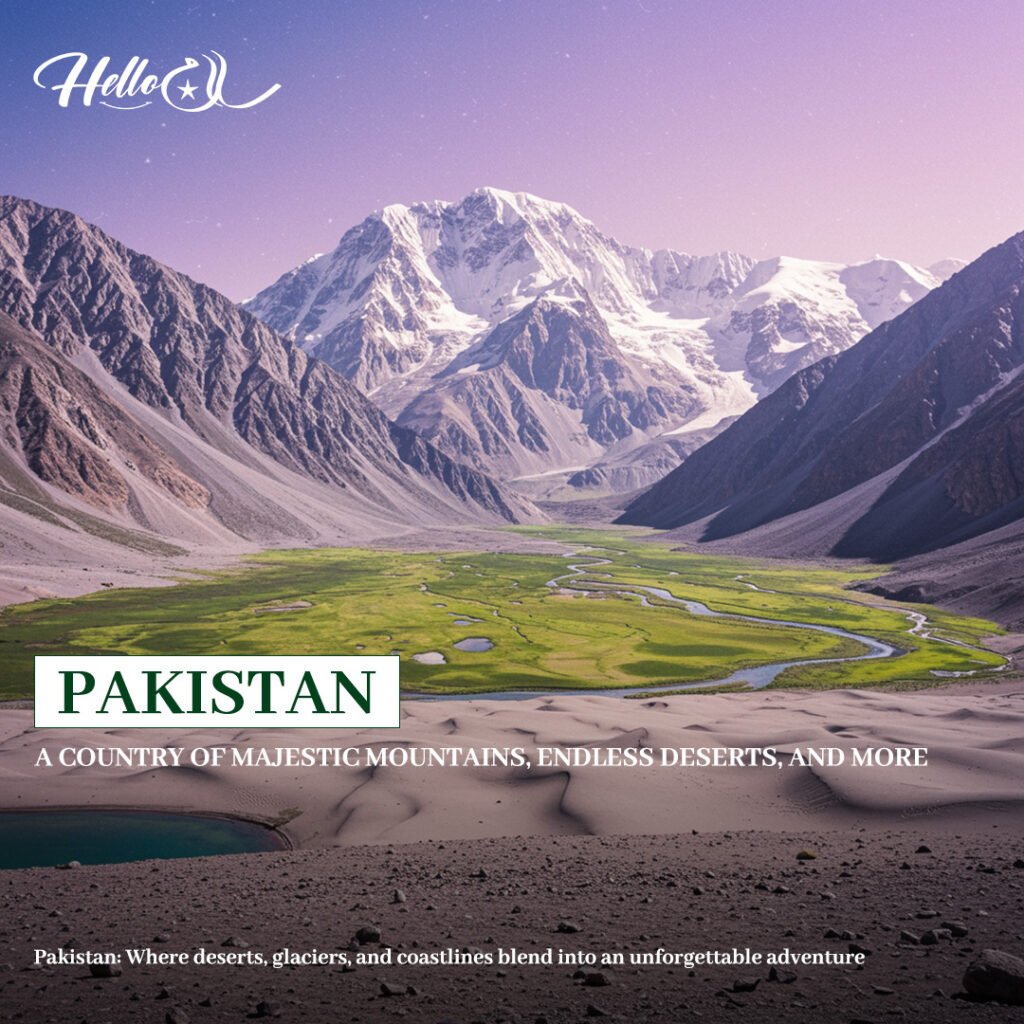
Pakistan is one of those rare countries where geography feels like a grand adventure novel. Turn a few pages, drive a few hundred kilometers and the setting changes dramatically. One moment you’re standing on sun-scorched sand dunes, the next you’re breathing thin mountain air beside ancient glaciers. From roaring rivers to silent plateaus, Pakistan doesn’t just offer landscapes; it delivers extremes, stitched together into one unforgettable journey.
The Northern Mountains
Let’s begin in the north, where Pakistan rises boldly toward the heavens. Gilgit-Baltistan is home to some of the world’s highest mountains, including K-2, the second-highest peak on Earth and arguably the most dramatic. Here, mountains don’t politely sit in the distance; they loom, they challenge, they command attention.
The Karakoram Range is a land of contradictions. Massive glaciers like Baltoro stretch across valleys like frozen rivers, while nearby villages burst with life and warmth. Hunza Valley feels almost unreal terraced fields carved into mountain walls, apricot trees blooming against snow-covered peaks, and skies so clear they seem sharpened.
This is where you learn humility. The mountains remind you how small you are, and how vast the world can be.
Glaciers and High-Altitude Deserts
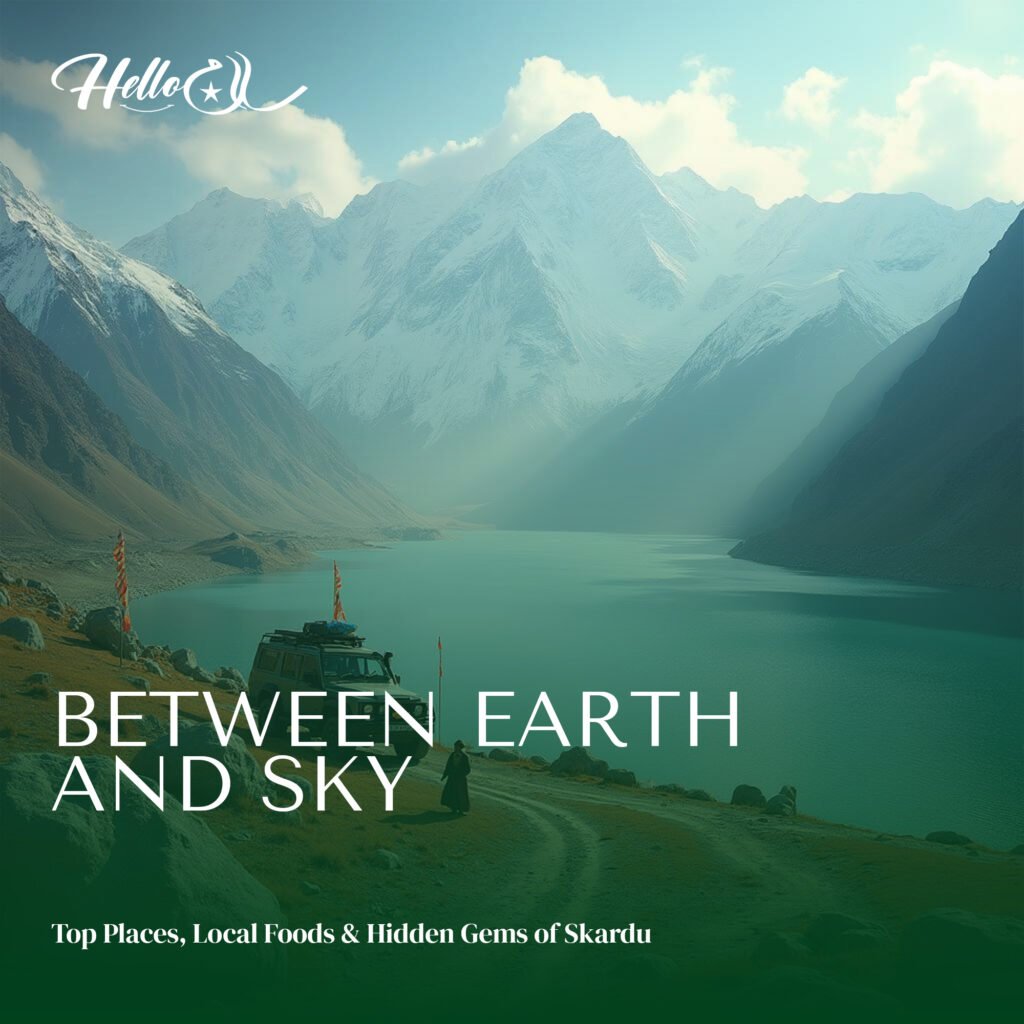
Pakistan is home to more glaciers than anywhere outside the polar regions. Yet, these icy giants coexist with cold deserts like Skardu and Deosai Plains. Deosai, often called the “Roof of the World,” transforms from a snow-covered wilderness in winter to a summer carpet of wildflowers, where yaks graze and marmots whistle warnings into the wind.
The silence here is powerful. It’s the kind of quiet that lets you hear your own thoughts clearly, sometimes for the first time.
Rivers, Valleys, and Forests
Flowing down from the mountains, Pakistan’s rivers carve life into the land. The Indus River, one of the oldest civilizations’ lifelines, winds through valleys, plains, and cities, binding the country together.
Swat Valley, often called the “Switzerland of the East,” is lush and welcoming. Pine forests, emerald rivers, and rolling meadows soften the country’s rugged edges. In places like Kaghan and Naran, waterfalls tumble beside roads, and every turn feels like a postcard waiting to be framed. These landscapes don’t overwhelm; they embrace.
The Deserts of Pakistan
Now head south, and the scenery transforms dramatically. The Thar Desert stretches across Sindh like a golden ocean, its dunes shaped by wind and time. Life here adapts beautifully, brightly dressed communities, resilient livestock, and traditions that have thrived for centuries.
Cholistan Desert, near Bahawalpur, carries echoes of history. The haunting ruins of Derawar Fort rise from the sand like a mirage, reminding travelers that even the harshest landscapes once hosted thriving civilizations.
In Pakistan’s deserts, survival is an art and beauty is found in simplicity.
Pakistan’s Coastline
Few expect Pakistan to have such a striking coastline, but the Arabian Sea tells a different story. From the bustling shores of Karachi to the untouched beaches of Balochistan, the coast offers a refreshing contrast to the inland extremes.
Places like Kund Malir and Ormara feel otherworldly, turquoise waters crashing against rugged cliffs, empty beaches stretching endlessly, and sunsets that paint the sky in impossible colors. The Makran Coastal Highway alone feels like a cinematic journey, where mountains meet the sea in dramatic fashion.
This is Pakistan at its most surprising.
Balochistan’s Rugged Beauty
Balochistan remains one of Pakistan’s least explored regions, yet it may be the most striking. Its terrain is raw and untamed rocky plateaus, lunar landscapes, mud volcanoes, and deep canyons.
Hingol National Park shows this wild beauty perfectly. Flamingo-filled wetlands coexist with arid hills, while ancient rock formations resemble sculptures carved by time itself. Traveling here feels like stepping onto another planet; one that hasn’t been edited for comfort, only authenticity.
Conclusion
What makes Pakistan extraordinary isn’t just the presence of extremes; it’s their proximity. Few countries allow you to experience glaciers, deserts, forests, plains, and coastlines without crossing borders or time zones.
Pakistan is not a single destination; it’s a collection of worlds layered into one. Each landscape tells a different story, yet together they form a narrative of resilience, diversity, and raw beauty.
To travel Pakistan is to travel through extremes and to realize that sometimes, the most powerful journeys are the ones that show you just how vast and varied home can be.
For more travel blogs like this, visit Hello Salam