
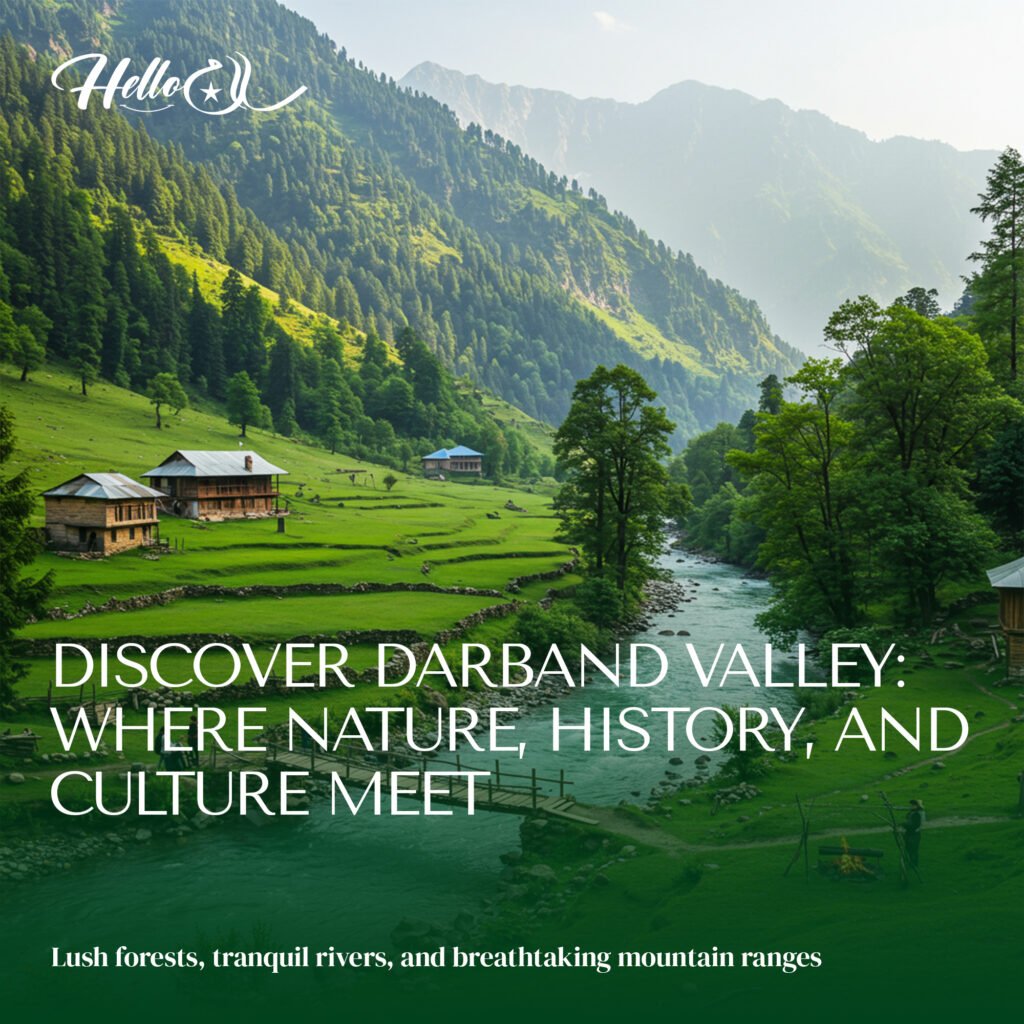
Darband Valley in Mansehra District is one of Hazara’s quietest escapes, a green, river-fed corner where the Indus meets Tarbela Lake and the hills of Tanawal roll away towards Oghi and Agror. It was once the seat of the princely state of Amb, and today it offers trekking, boating, trout and real village hospitality without the crowds of Naran or Murree. This 2026 guide covers how to get there, when to go, what to do, where to stay and how to plan a smooth, budget-friendly trip.
Darband Valley at a Glance
- Location: Darband town, headquarters of Darband Tehsil, Mansehra District, Khyber Pakhtunkhwa
- Region: Lower Pakhli and Tanawal area of Hazara, on the eastern shore of Tarbela Lake
- Tehsil status: Separate tehsil since August 2017, made up of the Darband, Nika Pani and Shanaya union councils
- Main routes: From Islamabad via the Hazara Motorway (M-15) to Haripur, then north along the Dor River valley; or via Mansehra through Lassan Nawab or Oghi
- Best time to visit: April to June and September to November
- Climate: Warm and temperate, with an average annual temperature of about 18°C and rain in every season
- Known for: Tarbela Lake views, Indus riverside villages, Naar River trout, Serri Top trek, Shergarh Fort nearby
- Languages: Hindko and Pashto are widely spoken, along with Urdu
- Emergency: Rescue 1122
Where Is Darband Valley?
Darband sits in the south-western part of Mansehra District, close to where the Indus River widens into the reservoir of Tarbela Dam. To the west lies the water and, beyond it, the hills of Swabi and Buner. To the north and east are the ridges of Tanawal and the Agror valley around Oghi, and to the south the land drops towards Haripur.
Administratively, Darband was part of Oghi Tehsil until late August 2017, when the government made it a separate tehsil with three union councils: Darband, Nika Pani and Shanaya. For travellers, that simply means Darband now has its own local offices and bazaar, which is handy for supplies before you head into the hills.
History: The Old Capital of Amb
Darband’s story is tied to the princely state of Amb, ruled by the Tanoli Nawabs, the oldest of the four princely families in what is now Khyber Pakhtunkhwa. Darband served as Amb’s capital, while Shergarh in the hills was its summer seat. The state was formally merged into the then North West Frontier Province on 28 July 1969.
When Tarbela Dam was built in the 1970s, the rising water submerged the old town of Darband and much of the Amb heartland. Local families lost homes, land and a great deal of heritage, and state records were moved to Shergarh Fort. The Darband you visit today grew up after that displacement, which gives the valley a quiet, reflective feel when you stand on the lakeshore. Dawn has a readable history of the founding of the Amb state if you want the full background.
Shergarh Fort
About 35 km north-west of Mansehra city, Shergarh Fort is the most important heritage site in the wider Darband area. According to a detailed feature in The Friday Times, the fort was built shortly after Maharaja Ranjit Singh’s commanders took the region in 1819, to guard routes towards Kashmir. In the 1870s Nawab Muhammad Akram Khan turned its inner quarters into a haveli with fresco art and woodwork. The fort still holds Amb State records and old cannons, though its western walls were damaged in the 2005 earthquake.
Shergarh remains the private residence of the Nawab’s family, so it is not a ticketed museum. Admire it respectfully from outside, and only enter if you have arranged permission through local contacts.
How to Reach Darband
There is no airport or railway station near Darband, so the trip is by road. Most visitors come from Islamabad, Rawalpindi, Abbottabad or Mansehra.
From Islamabad and Rawalpindi via Haripur
This is the most direct route for twin city travellers. Take the M-1 towards Peshawar and join the Hazara Motorway (M-15) at the Burhan interchange near Hasan Abdal. Exit at one of the Haripur interchanges (Hattar or Chechiyan) and drive through Haripur, then head north along the Dor River valley. The road passes plains and rolling hills before opening up to views of the Indus and Tarbela Lake as you near Darband. Check Google Maps on the day for the latest travel time, as local roads can be slow after rain.
From Mansehra via Lassan Nawab
From Mansehra, head south-west across the Pakhli plain and climb through the hills around Lassan Nawab. This route is known for wildflower-covered slopes in spring and traditional villages along the way. If you are coming from the north, the Hazara Motorway’s Mansehra interchange puts you on this road quickly.
From Mansehra via Oghi
The more adventurous option goes through Oghi in the Agror valley, then down through forested bends and small villages towards Darband. Oghi has a busy bazaar, so it is a good stop to buy snacks, water and fuel. The road is narrower and more winding, so it suits drivers comfortable with hill roads.
By Public Transport
Wagons and buses run from Rawalpindi and Islamabad to Haripur and Mansehra, and local vehicles connect these towns with Darband and Oghi. Expect changes and waiting time. For families, hiring a car with a local driver is far more comfortable.
Best Time to Visit Darband Valley
| Season | Months | What to Expect |
|---|---|---|
| Spring | April to June | Green hills, wildflowers, pleasant days; ideal for treks and picnics |
| Summer | July to August | Warm near the lake, cooler on the ridges; monsoon rain can affect roads |
| Autumn | September to November | Clear skies, golden fields, comfortable trekking weather |
| Winter | December to March | Cool and quiet; higher tops get cold quickly, shorter days limit treks |
Darband has a humid subtropical climate with around 1,150 mm of rain a year spread across all seasons, so pack a rain layer whatever month you travel. Late October and November are a lovely time right now: harvest colours, fewer visitors and crisp evenings on the lakeshore.
Things to Do in Darband
Trek to Serri Top and Nearby Peaks
Serri Top is the most popular hike, with wide views over the surrounding valleys and across to the hills of Buner and Swabi. Serigoria Top and Machai Sar Top are tougher and less travelled, best done with a local guide. Start early, carry water and tell someone your route.
Panja Gali
Panja Gali is a mountain pass in the Torghar side of the region, loved for walks, birdwatching and photography. We have a dedicated guide to Panja Gali, the hidden gem of Mansehra if you want to add it to your trip.
Boating on Tarbela Lake and the Indus
Local boats operate on the reservoir, and some even cross towards the Haripur and Swabi side. A slow evening ride as the sun drops behind the western hills is a highlight. Always agree the fare before you board and insist on life jackets, especially with children.
Riverside Villages: Karori and Judbha
These traditional villages on the Indus give a real sense of local life, with fields, mud and stone houses and friendly elders happy to chat. Dress modestly and ask before photographing people or homes.
Trout and Fresh Fish
The Naar River is known for freshwater trout, and fish from the Indus is served fried or spicy at small restaurants and roadside stalls. Pair it with local bread, seasonal vegetables and a cup of doodh patti.
Picnics, Camping and Cycling
The Tanawal and Agror valleys suit gentle cycling, picnics and easy hikes. Riverbanks and meadows make good camping spots, but camp only with local permission, keep fires small and away from dry grass, and take all litter back with you.
Where to Stay in Darband
Darband is not a resort town, so accommodation is simple. Options include a small number of guest houses in and around the town, basic rooms in Oghi, and village home-stays arranged through local contacts. Recent travellers mention a guest house in Darband with river and mountain views and parking, but facilities are modest and it is wise to call ahead, especially on long weekends.
For more choice, many visitors stay in Mansehra or Abbottabad and do Darband as a long day trip, or combine it with a night at Nathia Gali. If you are heading further north afterwards, our Naran Kaghan guide picks up where this route ends.
Budget Tips for a Darband Trip
- Share a car: Splitting a hired car between four or five people is usually cheaper and much easier than multiple wagon changes.
- Go on weekdays: Guest houses and boats are quieter, and you are more likely to negotiate a fair rate.
- Eat local: Dhaba-style meals and fresh fish stalls are far kinder on the wallet than packed lunches from the city.
- Carry cash: ATMs are limited in small towns, and many shops and boatmen prefer cash. Withdraw in Haripur, Mansehra or Abbottabad.
- Fill up early: Refuel and buy snacks in Haripur, Mansehra or Oghi.
- Agree prices first: Confirm boat fares, guide fees and room rates before you start.
For more ideas on saving money in the north, read our guide to exploring northern Pakistan on a budget.
Safety and Travel Tips
- Weather: Rain can arrive suddenly. During the monsoon, check forecasts and road updates before setting off, as hill roads can be hit by slides.
- Water safety: Tarbela Lake and the Indus are deep with strong currents in places. Do not swim in unfamiliar spots and keep children close to the bank.
- Trekking: Wear proper shoes, carry water and a power bank, and start early so you are back before dark.
- Mobile signal: Coverage is patchy on the ridges. Download offline maps before you leave Haripur or Mansehra.
- Culture: Darband is a conservative area. Dress modestly, ask before taking photos of women or homes, and respect prayer times.
- Emergencies: Dial Rescue 1122 for ambulance and rescue services in Khyber Pakhtunkhwa.
For a wider picture of current road and travel conditions in the north, see our update on travelling in northern Pakistan.
Sample Two Day Darband Itinerary
- Day 1: Leave Islamabad early, take the Hazara Motorway to Haripur and drive up the Dor valley. Lunch on fresh fish near Darband, then a sunset boat ride on Tarbela Lake. Overnight in Darband or a nearby guest house.
- Day 2: Morning hike towards Serri Top or a walk through Karori and Judbha, then drive via Oghi to Mansehra with a stop to view Shergarh Fort from outside. Return to Islamabad on the motorway.
Frequently Asked Questions
Where is Darband Valley located?
Darband is in Mansehra District, Khyber Pakhtunkhwa, on the eastern shore of Tarbela Lake. It is the headquarters of Darband Tehsil, which was created in August 2017.
How do I get to Darband from Islamabad?
Take the Hazara Motorway (M-15) to Haripur, then drive north along the Dor River valley to Darband. You can also go via Mansehra and Lassan Nawab or Oghi.
What is the best time to visit Darband Valley?
April to June and September to November offer the most pleasant weather for trekking, boating and sightseeing. Monsoon months can bring heavy rain and road delays.
Is Darband Valley safe for families?
Darband is a peaceful, hospitable area that suits family trips. Take normal precautions near the water, dress modestly and check the weather before travelling.
Was Darband the capital of Amb State?
Yes, Darband was the capital of the princely state of Amb, ruled by the Tanoli Nawabs. The old town was submerged when Tarbela Dam was built in the 1970s.
Can I visit Shergarh Fort?
Shergarh Fort, about 35 km north-west of Mansehra, is still a private residence of the Nawab’s family. You can view it from outside, and entry needs prior permission.
Are there hotels in Darband?
Accommodation is limited to a few guest houses and home-stays, so call ahead. Many visitors stay in Mansehra or Abbottabad and visit Darband as a day trip.
Darband Valley rewards travellers who like their mountains quiet and their history close at hand. For more trip ideas, see the Darband entry on Wikipedia for local facts, and keep exploring Pakistan’s hidden valleys with HelloSalam.